




Product Overview
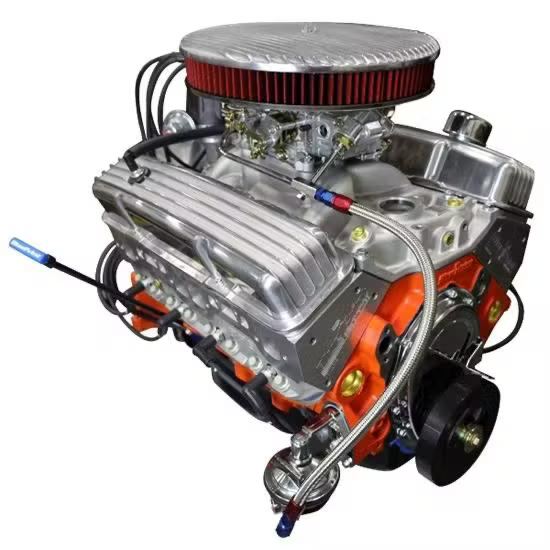
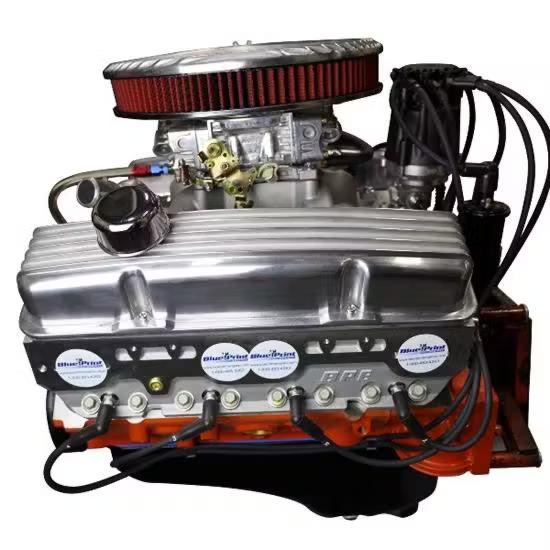
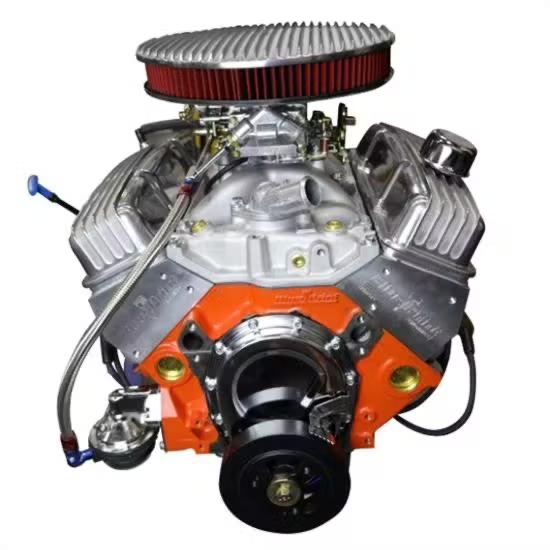
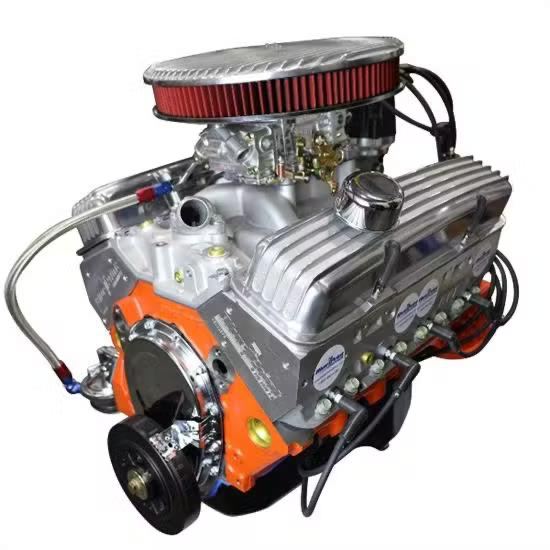
The BluePrint Engines 383 CI Stroker Crate Engine is a precision-engineered, turnkey long-block designed to deliver robust street performance and reliable track duty.
Tailored for low-clearance applications with a small-diameter harmonic balancer, small-cap distributor, and drop-base air cleaner, this crate engine is ideal for classic American muscle platforms — including Corvette, Tri-Five Chevy, and Camaro — that require high output without major firewall or hood modifications.
Purpose-built and dyno-tested, the BluePrint 383 puts out a tested 436 horsepower and 443 ft-lbs of torque on a conservative calibration, backed by a 10.0:1 compression ratio and a hardened rotating assembly. Components include aluminum cylinder heads, a hydraulic roller cam, cast steel crankshaft, and hypereutectic pistons — an assembly that provides strong mid-range torque, a broad powerband, and excellent thermal stability.
Performance Highlights
- Horsepower / Torque: 436 HP / 443 FT-LBS (dyno-tested)
- Compression Ratio: 10.0:1
- Build: Base-dressed longblock with carburetor
- Camshaft: Hydraulic roller cam — smooth idle, robust mid-range
- Intended Use: Street rods, restorations, low-clearance performance swaps
- Quality Control: Each engine dyno-tested and shipped with results sheet
Block
- New BluePrint cast iron block — manufactured & machined in the USA
- 4.000″ bore, 4-bolt mains for added durability
- 1-piece rear main seal for leak resistance
- Provision for mechanical fuel pump
- Passenger-side dipstick and clutch linkage drilled/tapped
Rotating Assembly
- BluePrint cast steel crankshaft — 3.750″ stroke
- OEM-type 5.700″ connecting rods with 150,000 psi rod bolts
- Hypereutectic pistons for superior heat tolerance and dimensional stability
- Externally balanced front and rear
Cylinder Heads
- BluePrint aluminum cylinder heads (H8002K)
- 64cc combustion chambers for efficient burn
- 2.02″ intake / 1.60″ exhaust valves
- 195cc intake runners / 75cc exhaust runners optimized for torque and mid-range flow
Camshaft & Timing
- Hydraulic roller cam
- Lift: .544″ intake / .555″ exhaust
- Duration: 230° intake / 236° exhaust @ .050″
- Lobe separation angle: 110°
- Ignition timing baseline: 34° total @ 3,500 RPM
Included Accessories
- Premium vintage-style valve covers and matching drop-base air cleaner
- 6.75″ harmonic balancer (small diameter)
- 750 CFM carburetor — pre-tuned for the supplied combination
- Mechanical fuel pump and feed line
- Oil pan (rear-sump), timing cover, and aluminum intake manifold
- Under-header spark plug wires suitable for Rams Horn manifolds
- Small-cap distributor — ready-to-run with tach drive and coil
- Spark plugs and full wiring provisions
- Dyno test results included with shipment
Warranty & Quality Assurance
The engine is backed by a 30-month / 50,000-mile limited warranty. Build quality includes multi-point inspection, precision balancing, and production dyno validation to ensure consistent performance and reliability.
Frequently Asked Questions (15)
- Is this engine turnkey ready?
Yes. The engine ships as a base-dressed longblock with carburetor, distributor, intake, oil pan, and accessory fittings pre-installed to minimize bench work at installation. - Does it fit under a stock Corvette hood?
Yes. The small-diameter harmonic balancer, small-cap distributor, and drop-base air cleaner were selected specifically for low-hood-clearance applications. Confirm your firewall-to-hood clearance dimension prior to purchase for vehicles with heavy aftermarket accessories. - What fuel is recommended?
Use premium pump gasoline (91 AKI / 95 RON or higher recommended). The engine calibration and 10.0:1 compression ratio are tuned for pump gas; if using E85 or race fuels, retuning is required. - Is the camshaft suitable for daily driving?
Yes. The hydraulic roller cam in this build provides a smooth idle, excellent mid-range torque, and daily drivability while still delivering strong top-end power. - Can I convert to EFI later?
Yes. The intake and ignition are EFI-compatible — the aluminum intake can be swapped for an EFI manifold, and the distributor can be replaced with an EFI crank/cam-triggered system as needed. - Does the engine include a dyno sheet?
Yes. Each engine ships with a printed dyno results sheet showing peak horsepower and torque numbers as well as a torque curve for validation. - Is the block new or remanufactured?
The block is a new BluePrint cast iron block manufactured and machined in the USA. - Is this compatible with a manual transmission?
Yes. The block is drilled and tapped for clutch linkage and is compatible with standard manual transmission bellhousing patterns for GM small-block V8s. - What oil should I use for break-in?
Use a high-zinc break-in oil or the manufacturer’s recommended break-in oil for roller cam installations for the first 500 miles, then switch to a quality synthetic that meets your climate and use profile. - Does it come with the harmonic balancer and timing cover?
Yes. The small-diameter harmonic balancer (6.75″) and timing cover are included and installed at the factory. - Is the warranty transferable?
No. The warranty applies to the original purchaser; check warranty paperwork for detailed terms and enumerated exclusions. - Can I request a custom cam profile?
Yes. BluePrint offers build customization for volume orders or special requests — contact the sales team for lead times and pricing. - Are all accessories pre-installed?
Most accessories required for initial start-up are pre-installed (carburetor, distributor, wiring provisions, fuel pump). Items such as alternator, power steering pump, and A/C compressor are application-specific and not included. - What are the torque and horsepower peaks?
Peak horsepower: 436 HP (dyno); peak torque: 443 ft-lbs (dyno). Refer to the included dyno sheet for RPM-specific data. - Can this engine be used in marine applications?
No. This engine is built for automotive applications and is not configured for marine cooling, exhaust, or corrosion protection.
Customer Reviews (20)
- ⭐⭐⭐⭐⭐ “Installed in my 1969 Camaro — perfect fit, flawless performance. Torque is amazing.” – Mike T., CA
- ⭐⭐⭐⭐⭐ “Dyno sheet matched advertised numbers. Runs strong and smooth.” – Robert H., TX
- ⭐⭐⭐⭐⭐ “Great low-clearance design for my Corvette swap.” – James L., FL
- ⭐⭐⭐⭐ “Shipping delay was a pain, but engine was perfect.” – Steve P., NY
- ⭐⭐⭐⭐⭐ “High-quality machining and great fitment.” – David G., OH
- ⭐⭐⭐⭐⭐ “Idle is smooth and the midrange pull is impressive.” – Mark W., MI
- ⭐⭐⭐⭐⭐ “Excellent support from the vendor on install questions.” – Alan C., IL
- ⭐⭐⭐⭐ “Small cosmetic chip on valve cover; performance is brilliant.” – Jeff K., PA
- ⭐⭐⭐⭐⭐ “Plug-and-play and the dyno sheet is a nice touch.” – Brian D., WA
- ⭐⭐⭐⭐⭐ “Perfect for street/strip use.” – Tom S., GA
- ⭐⭐⭐⭐⭐ “No leaks, steady oil pressure, absolutely satisfied.” – Leo M., NC
- ⭐⭐⭐⭐⭐ “Classic sound with modern reliability.” – Chris J., AZ
- ⭐⭐⭐⭐⭐ “Well packaged, arrived ready to bolt in.” – Patrick B., OR
- ⭐⭐⭐⭐ “Required slight ignition timing tweak on first start.” – Greg H., MO
- ⭐⭐⭐⭐⭐ “Much stronger than my old 350 — impressive upgrade.” – Ryan L., CO
- ⭐⭐⭐⭐⭐ “Everything works as described — very happy.” – Paul V., TN
- ⭐⭐⭐⭐⭐ “Excellent balance and reliability.” – Ken R., LA
- ⭐⭐⭐⭐⭐ “Runs cool and responds well to throttle.” – Tim E., KY
- ⭐⭐⭐⭐⭐ “BluePrint craftsmanship shows through.” – Alex P., NC
- ⭐⭐⭐⭐⭐ “Transformed my project car — highly recommended.” – Nick D., IN
Ultimate Guide to the BluePrint 383 Stroker Crate Engine — Engineering, Performance & Installation
When restoring a classic or building a period-correct street/strip machine, selecting the right crate engine is one of the most consequential decisions you’ll make. The BluePrint Engines 383 CI Stroker Crate Engine combines period-correct small-block architecture with modern component engineering, delivering 436 horsepower and 443 ft-lbs of torque in a compact, low-clearance package. This guide walks through the engineering choices, performance expectations, installation considerations, and real-world ownership guidance to help you decide whether the BluePrint 383 is the right powerplant for your project.
Why Choose a 383 Stroker?
A 383 stroker is a small block Chevy that uses a longer-stroke crankshaft in combination with existing bore diameters to increase displacement — typically from a 350 to 383 cubic inches. The result is a more muscular torque curve without dramatically increasing engine external dimensions. For classic platforms, this is ideal: it preserves the compactness of the SBC (small block Chevy) while bringing substantial gains in low- and mid-range torque, which translates to livelier street performance and better real-world drivability.
Engineering Highlights of the BluePrint 383
The BluePrint 383’s specification set reads like a focused performance recipe. The cast iron block provides a durable foundation; the decision to use a cast steel crankshaft instead of a nodular or billet piece balances cost with strength for street/strip reliability. OEM-style 5.700″ rods with high-strength bolts ensure rod integrity under load, and hypereutectic pistons reduce thermal expansion compared to conventional cast pistons, improving ring seal stability under sustained operation.
Aluminum Heads & Flow Characteristics
The H8002K aluminum heads are selected for their favorable flow characteristics and combustion chamber design. With 64cc chambers and 2.02″/1.60″ valves, these heads maintain a balance between street-friendly torque and the breathing capacity required for the stated 436 HP figure. The intake runner sizing (195cc) supports a broad torque curve rather than spiking at high RPM, making the engine flexible for a variety of gear and tire setups.
Camshaft Selection: The Street-Strip Sweet Spot
The hydraulic roller cam (.544″/.555″ lift, 230/236° duration @ .050) is purpose-built to maximize mid-range torque without sacrificing idle quality. Hydraulic rollers offer lower maintenance than solid cams while enabling higher spring pressures and more aggressive profiles. The 110° lobe separation angle helps maintain a usable idle and reduces overlap, which is essential for drivability in street-driven classic cars.
Dyno Testing & What the Numbers Mean
Dyno-tested numbers are only as useful as the conditions that produce them. When BluePrint provides a dyno sheet showing 436 HP and 443 ft-lbs, those values represent a complete baseline — including carburetor jetting, ignition timing, and intake/exhaust plumbing used during the test. The included dyno sheet helps installers match real-world setups more closely to the tested configuration. Expect some variance on your chassis dyno depending on intake/exhaust restrictions, altitude, and drivetrain losses, but the dyno numbers are a reliable baseline for comparative performance.
Installation Considerations and Fitment
Fitment is the number one practical concern for classic car engine swaps. This crate engine is explicitly designed for low-hood clearance applications: a smaller harmonic balancer diameter, small-cap distributor and drop-base air cleaner reduce the overall vertical profile. Before purchase, verify vital clearances — hood to carburetor/top of carb, distributor cap to firewall, and header clearance for Ram horn manifolds if used. Additionally, confirm the oil pan (rear-sump) matches your chassis configuration or specify a pan suitable for your chassis when ordering.
Transmission & Bellhousing Compatibility
The block maintains GM small-block bellhousing bolt patterns and is drilled/tapped for clutch linkage. When pairing with manual transmissions, verify pilot bushing compatibility and crank pilot diameter. For automatic transmissions, ensure torque converter stall speed and torque capacity complement the engine’s torque curve to maintain drivability.
Fuel & Tuning Advice
BluePrint sets the engine up to run on premium pump gas (91+). If you intend to use ethanol blends or race fuels, plan for a retune — specifically to adjust ignition timing and possibly compression if using higher knock-resistant fuels. Carburetor jetting directly affects throttle response and part-throttle drivability; use the dyno sheet as a starting point and perform incremental jetting adjustments on a chassis dyno or via careful road testing with AFR (air-fuel ratio) monitoring.
Break-In & Initial Start Procedures
Proper break-in is critical, especially for lifter and cam longevity. Use a break-in oil with elevated zinc (ZDDP) for the first 500 miles and follow the manufacturer’s specified RPM and load cycles during the initial run-in period. Confirm oil pressure and absence of leaks, and do not subject the engine to heavy load until recommended break-in mileage is complete.
Maintenance & Longevity
With correct break-in and regular oil changes using high-quality oil and filters, these engines are built to provide years of dependable service. Inspect valve cover bolts, intake manifold bolts, and accessory drive alignment after the initial 500–1,000 miles to confirm torque values. Periodic valve-train checks are suggested in high-mileage or high-load applications even with hydraulic rollers to confirm lifter and pushrod integrity.
Comparison: BluePrint 383 vs. Modern LS Swaps
An LS swap is attractive for its modern electronics, compact packaging, and superior high-rpm airflow in many configurations. The BluePrint 383, however, holds advantages for purists and restorers: it retains small-block character, uses simpler carbureted systems for period authenticity, and typically has easier mechanical fitment in cars originally designed for an SBC. Torque at lower revs, retro fitment, and lower electronics complexity are compelling reasons to choose a 383 stroker in classic applications.
Real-World Use Cases
For a Tri-Five Chevy restored for weekend canyon runs, the BluePrint 383 provides immediate drivability and overtaking power without sacrificing classic aesthetics. In a restomod Corvette with upgraded brakes and suspension, the 383 delivers the aggressive torque needed for spirited driving while fitting under lowered hoods with minimal modification. For street/strip builds, its robust rotating assembly and dyno-validated output make it a reliable contender for bracket competition.
Warranty & Support
The included 30-month / 50,000-mile limited warranty underscores BluePrint’s confidence in manufacturing processes and component selection. Warranty work requires following specified installation and maintenance procedures, so keep the dyno sheet and installation paperwork in the vehicle file to support claims if needed.
Final Assessment
The BluePrint Engines 383 CI Stroker Crate Engine is a thoughtfully specified powerplant that blends classic small-block charm with modern engineering safeguards. If your project values period-correct simplicity, strong low-end torque, and a manageable installation that fits under constrained hoods, the 383 stroker is an exceptional choice. Use the dyno sheet to match fueling and timing, follow recommended break-in steps, and expect a dramatic improvement in real-world acceleration and throttle response.
Actionable Checklist for Buyers
- Verify hood-to-carburetor and distributor clearance before ordering.
- Confirm oil pan sump type (rear-sump vs. front-sump) for chassis compatibility.
- Plan to use premium pump gas (91+ AKI) or retune for alternative fuels.
- Follow break-in oil recommendations and do the initial idle/load cycle per instructions.
- Keep the dyno sheet and installation paperwork for warranty and tuning reference.
Conclusion
For builders who want an authentic small-block driving experience with proven, dyno-verified performance, the BluePrint 383 Stroker Crate Engine delivers an outstanding balance of torque, reliability, and fitment convenience. Whether you’re restoring a classic Corvette, upgrading a Tri-Five Chevy, or building a pro-touring Camaro, this engine provides the power and packaging needed to make your project a standout — all while preserving the heart and soul of a true small-block V8.


Reviews
There are no reviews yet.